
Land Stewardship
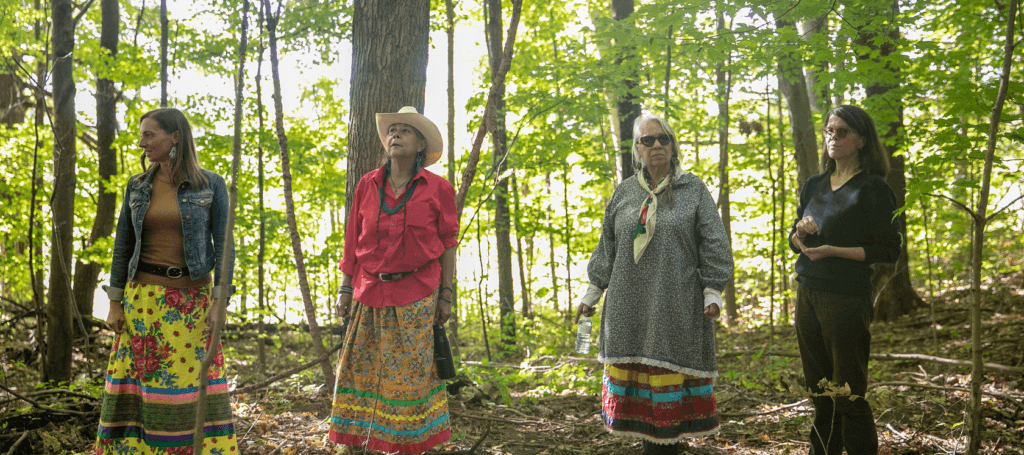
Our approach to stewardship is founded on a perspective shared by two of our distinct projects: Mno Aki and Critical Relationships. While these initiatives stem from different Nations and territories, they unite to challenge the traditional view of land as a commodity, choosing instead to honour the land as a relative.
Mno Aki:
This philosophy is rooted in the mandate of Mno Aki (Good Earth). We view the land not as a collection of inanimate resources, but as a society of living beings. Here, trees are viewed as “The Standing People”—animate spirits with whom we share a duty of care. This work embraces the concept of Mashkiki (medicine), which translates literally to “The Strength of the Earth.” We operate on the understanding that the land provides us with our shelter, protection, teachings and our medicine; when we build upon these relationships—protecting the earth and water—they, in turn, provide us with everything we need and protect us.
Critical Relationships:
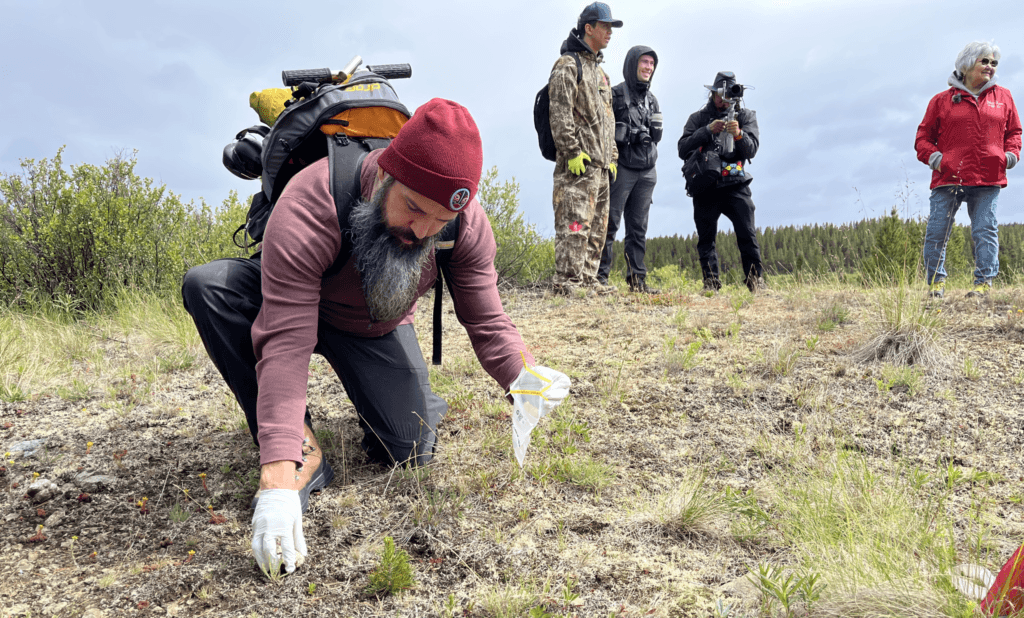
This worldview is deepened and mirrored by our work within the Tahltan Nation under the Critical Relationships project. Through the Tahltan concept of Keyeh, we understand that “home” is more than a physical location; it is an interconnected system of weather, spirits, and living beings. This commitment is realized through Kōnelīn (Beautiful Land), ensuring that our actions are guided by a mind that reflects the beauty and order of the land itself.
Reciprocal Belonging: These distinct lineages of thought converge on a single truth: the land does not belong to us; we belong to the land. Whether we are serving the “Good Earth” or honouring “Our Home,” our actions are governed by respect, relationship, and gratitude.
We build stewardship systems based on three pillars:
1. Intention: The Earth as Medicine We engage with the land not merely as a resource to be mined, but as a relative to be cared for. Drawing on the meaning of Mashkiki, we prioritize the nourishment of life systems, understanding that respectful, reciprocal relationships are the only path to true abundance.
2. The Root: Cultural Consent We seek guidance and consent from the Ancestors and Elders who hold the historical memory, spiritual laws, and sophisticated knowledge systems. We acknowledge that the land holds the wisdom of the past, and we must listen before we act.
3. The Future: Intergenerational Integrity We engage youth as “natural integrators,” bridging the values of the Seven Generations with modern ecological innovation. By connecting the wisdom of the past with the tools of the future, we ensure that the “strength of the earth” remains intact for those yet to come.
Our Approach
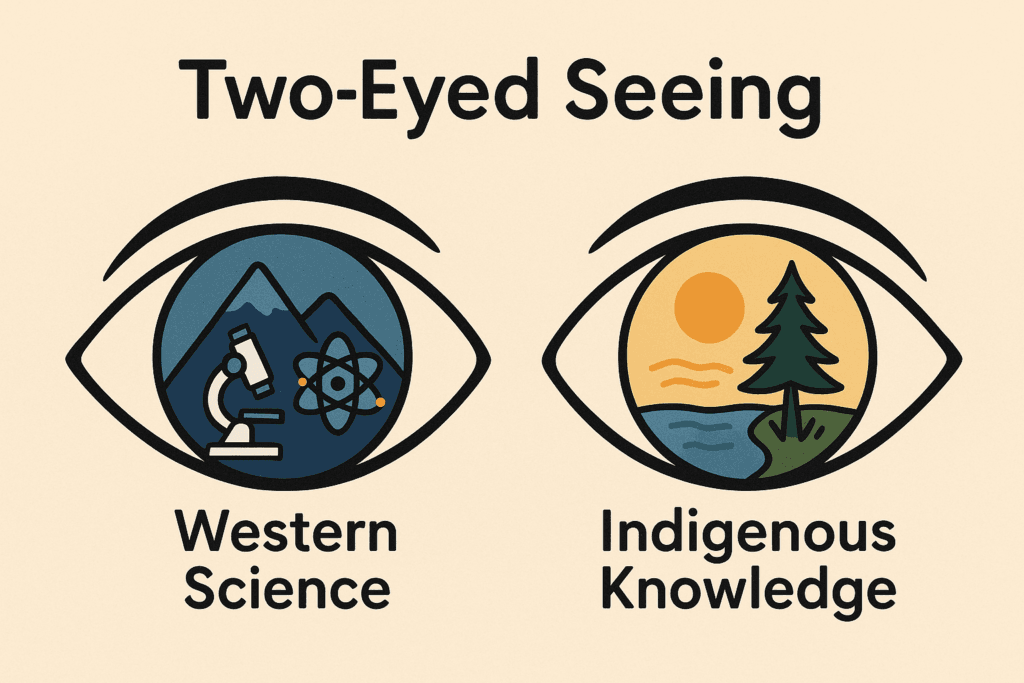
To operationalize these worldviews, we look to the Mi’kmaw concept of Etuaptmumk (Two-Eyed Seeing). This principle guides us to see with one eye the strengths of Indigenous ways of knowing, recognizing the spirit and animate nature of the land and with the other eye the strengths of Western tools, using both together for the benefit of all.
This is not a checklist, but a protocol of being that moves us from transactional thinking (what can I get?) to relational thinking (how do I serve?
Read more about our two flagship projects here:
Critical Relationships
An Indigenous Led Mineral Exploration project rooted in Tahltan Values
The Critical Relationships Project goes beyond mineral deposits to value the true wealth of Keyeh: the ecosystem of relationships. By braiding Tahltan knowledge, scientific approaches, ecological and economic innovation, we are building a new system of stewardship that includes:
True Value Accounting:
Expanding how we measure value on the land to include cultural, ecological, and spiritual wealth alongside economic data.
The Tahltan Continuum:
Ensuring knowledge of how to care for the land (keyehdī) is preserved across generations, proving that responsible resource management must begin with honoring the land as home.
Reciprocity
Shifting from “consultation” to “gift giving” and deep listening, ensuring our work nourishes the community rather than extracting from it.
Mno Aki Land Trust
Redefining Conservation on Indigenous Terms
Mno Aki (meaning “Good Earth” in Ojibwe) is an Indigenous-led land trust governed by Grandmothers. It represents the practical application of our belief that conservation is achieved when the relationships that have sustained the land for thousands of years are re-established.
Guided by the "Seven Generations" philosophy, Mno Aki works to:
- Protect and Regenerate: Holding land and water ecosystems for the health and benefit of future generations.
- Reclaim Stewardship: Empowering Indigenous women and Grandmothers—the traditional knowledge keepers and water walkers—to monitor the health of the land.
- Heal Relations: Creating spaces where culture, language, and land-based learning can flourish, ensuring the “Good Earth” remains vibrant for those yet to come.